Quantity Reconciliation: Best Practices for Alternative Delivery Success
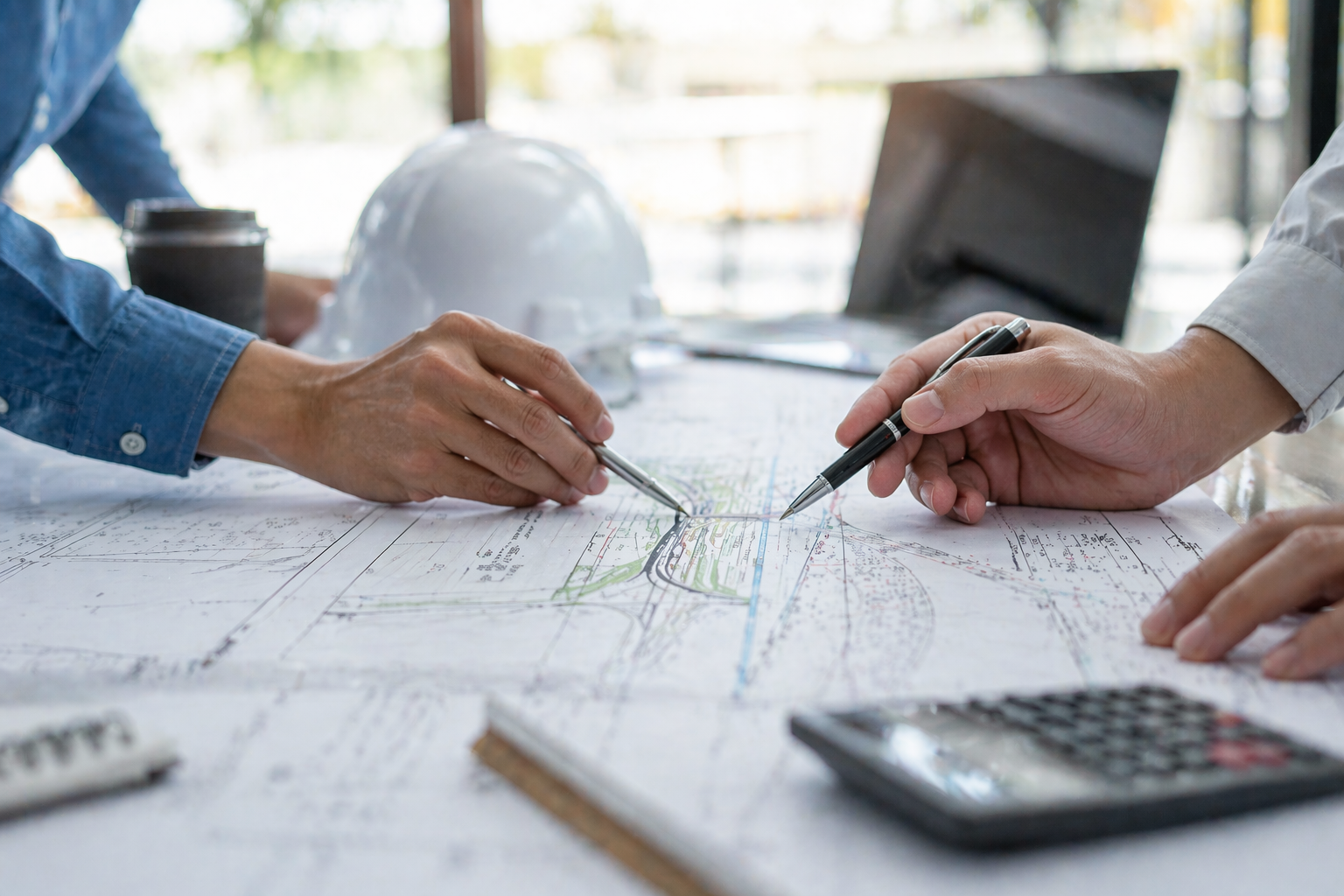
In alternative delivery methods like CMGC, PD-B, and CMAR, early and accurate alignment on bid items and quantities is essential for ensuring accuracy and alignment in the estimate. Reconciling quantities can also help build trust, control costs, and minimize disputes. Unlike traditional design-bid-build, these collaborative approaches overlap design and construction phases, introducing multiple quantity sources: designer estimates, contractor proposals, independent verification, and final agreed figures for the GMP or lump sum.
At ICE Teams, we’ve seen firsthand how disciplined quantity reconciliation prevents 5-15% cost growth from unresolved variances. Our go-to tool, the Quantity Reconciliation Form (https://iceteams.com/toolbox), provides a clear, side-by-side comparison that drives transparency and accountability.
Why Quantity Comparison Matters Early
Alternative delivery thrives on collaboration, so we recommend project teams reconcile quantity differences early to ensure that all estimators are operating with the same foundation. Quantity differences can stem from differences of understanding in the following areas:
Interpretation of plans (e.g., average vs. site-specific cross-sections)
Field adjustments (swell/shrink factors, waste allowances)
Unit conversions or density assumptions (CY to TON for aggregates/asphalt)
Design maturity at the time of proposal
Means and methods to construct the project (shoring design and dimension differences, etc.)
Without reconciliation, these variances can erode contingency, trigger change orders, or delay GMP negotiations. Our experience across U.S. projects shows that addressing them during open-book estimating builds owner confidence and unlocks innovation.
Key Elements of the Quantity Reconciliation Form
The Quantity Reconciliation form we use and recommend includes:
Columns for each source: Designer Quantities, Contractor Quantities, ICE Quantities, and final Agreed Quantities.
Notes fields: Critical for documenting reasons behind differences (e.g., “Contractor applied 15% swell based on geotech report”).
Actions tracking: “Who, What, When” assigns responsibility for resolution, ensuring follow-through in meetings.
Best Practices We Apply on Every Project
Start Early and Iterate: Populate the form during conceptual/preliminary design, then update through 30, 60, and 90% milestones. This iterative approach helps identify and track quantity changes as the project progresses and catches issues before they become expensive.
Leverage ICE for Objectivity: Our independent quantity checks reduce bias and provide a reliable, justifiable benchmark. We aim to keep agreed-upon variances under 5-10% before moving to cost reconciliation.
Document Assumptions Rigorously: Use Notes to explain every difference. Transparency here prevents future claims and supports audits.
Assign and Track Actions: Every unresolved item gets an owner, action, and deadline. Review progress in regular reconciliation sessions to maintain momentum.
Focus on Risk and Value: Prioritize elements that drive the budget like earthwork, pavement materials, and structural concrete. Where possible, capture value engineering opportunities during reconciliation.
The Payoff
Effective quantity reconciliation fosters collaboration, reduces change-order risk, reduces job costs, strengthens GMP negotiations, increase estimate precision, and positions projects for on-time, on-budget delivery. On past projects, we have seen that teams that master this step consistently achieve better outcomes and stronger partnerships.
The Quantity Reconciliation Form is a simple yet powerful tool in our alternative delivery toolbox. When used consistently, it turns potential friction into shared success.
If you’d like guidance on applying it to your next project, reach out, we’re happy to help.

The Trolley Modernization Project is a transformative investment in Philadelphia’s light rail network. As part of SEPTA’s 12-year capital program, this initiative is designed to deliver safer, faster, and more reliable transit service while improving accessibility and expanding connections across the region.
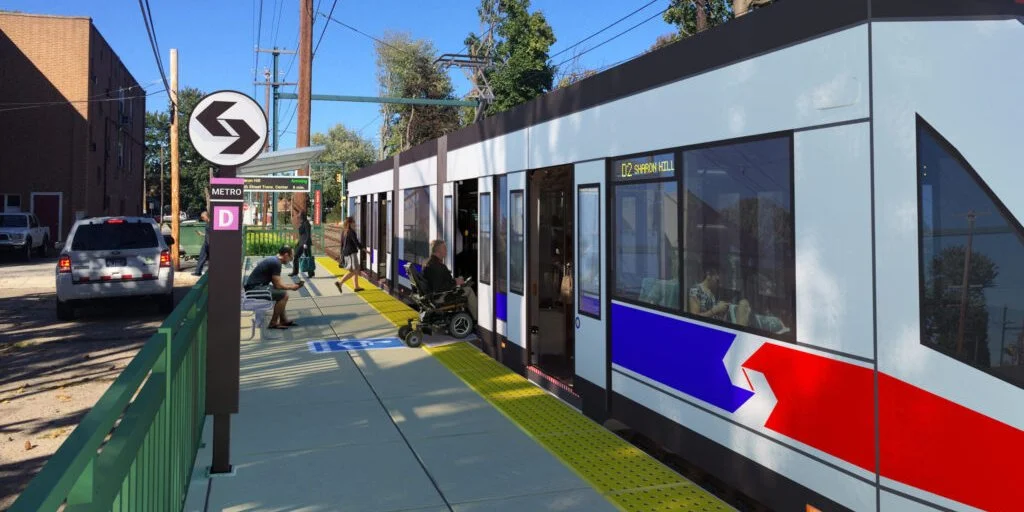
With a projected program-wide value of approximately $1.8 billion, this multi-package effort touches every aspect of the trolley system, from maintenance facilities and track infrastructure to advanced train control systems.
Modernizing the Backbone of the System
The program includes three major components currently advancing through design:
Heavy Maintenance Facility (HMF): A new 19-acre facility at 5100 Grays Avenue will serve as the central hub for SEPTA’s incoming ADA-accessible light rail fleet. The facility will include inspection and overhaul shops, a train wash, traction power systems, test tracks, and supporting yard infrastructure. The HMF will be built in phases to maintain operations. After completion, it will ensure the new fleet is properly maintained for decades to come.
Green Line Tunnel – CBTC System Replacement: In the heart of Center City, SEPTA is replacing legacy signal infrastructure in the Green Line tunnel (15th to 40th Street) with a modern Communications-Based Train Control (CBTC) system. This upgrade introduces advanced train control technology that improves safety, increases operational flexibility, and prepares the system for higher-capacity service. By modernizing the tunnel’s core systems, SEPTA is laying the groundwork for a more resilient and efficient transit network.
T5 – Elmwood & Eastwick Corridor Modernization: Spanning from the 40th Street Portal to the Eastwick Loop, the T5 package focuses on replacing aging track, platforms, power, and communications infrastructure. When complete, Southwest Philadelphia riders will experience upgraded stations, improved reliability, and infrastructure designed to support the new low-floor, accessible fleet.
ICE Teams’ Role
Innovative Contracting & Engineering (ICE Teams) is providing constructability reviews at the 30%, 60%, and 90% design stages for each package.
Our team is working alongside designers and project partners to ensure that what is drawn on paper can be efficiently and safely built in the field. This includes:
Reviewing phasing and sequencing strategies,
Identifying coordination gaps between disciplines,
Evaluating access, staging, and installation feasibility,
Supporting comment resolution and bid readiness.
Across more than 330 constructability comments on the T5 package alone, our team has improved clarity, reduced construction risk, and strengthened alignment between design, cost, and schedule.
Why It Matters
Public transit systems are more than infrastructure, they are economic lifelines. The SEPTA Trolley Modernization Program supports:
Improved accessibility with ADA-compliant vehicles and platforms,
Increased safety and reliability through modern control systems,
Expanded service capacity to meet future demand,
Long-term resilience through upgraded facilities and infrastructure.
By addressing constructability early in design, ICE Teams helps position this multi-billion-dollar program for smoother delivery, fewer surprises during construction, and stronger cost and schedule certainty.
As SEPTA redefines the future of light rail in Philadelphia, we are proud to support a program that enhances mobility, strengthens communities, and prepares the system for the next generation of riders.


Mike Mullins, Cost Estimator
ICE Teams is made up of people who bring expertise, curiosity, and dedication to their work. One of those people is Mike Mullins, whose passion for problem-solving and technical innovation makes him a valuable part of the team.
Mike grew up in a Navy family and lived in South Carolina, Guam, California, Oregon, Colorado, and Missouri, before finally settling down in Texas. Moving frequently taught him how to adapt quickly and approach new challenges with confidence—skills that have served him well throughout his career.
He built his technical foundation by studying construction management while exploring interests in coding, web development, and 3D modeling. Early in his career, at an engineering firm in Northern California, Mike supported a variety of community projects where he gained hands-on experience in design coordination, quality control, and project layout. It was during this time that he began developing the advanced modeling skills that would later become one of his specialties.
Over the years, Mike has contributed to several major infrastructure projects across the country. On one bridge reconstruction project following Hurricane Katrina, he independently created a complete 3D model of the structure from paper plans, helping the team accurately plan and execute construction.
Today at ICE Teams, Mike serves as an earthwork specialist, using modeling and estimating tools to analyze grading, calculate quantities, and develop mass haul reports that support accurate project planning.
Mike is also passionate about collaboration and mentorship. He recently began hosting working sessions with teammates who are developing their own modeling skills, creating a space to share ideas and lessons learned.
Outside of work, Mike enjoys coding and technology projects, along with outdoor activities like off-roading, skiing, and snowmobiling.
Mike’s technical expertise, curiosity, and team-focused mindset reflect the values that make ICE Teams successful, and we’re excited to see the continued impact of his work.

Alternative Delivery Consulting Services (PDB, CMGC, CMAR, DB, P3)
Alternative Delivery Processes Training
Independent Cost Estimating (Production-Based Cost Estimating)
Critical Path Scheduling Using Primavera P6
Constructability Reviews
Risk Management/Mitigation
Innovation in Construction Techniques
Negotiation
Change Order Reviews
We love what we do! We have a passion for finding creative approaches to construction. We are constantly looking for innovative construction techniques to add value to the projects we are working on. Our team has found ways to reduce schedule and/or construction costs on every project we have worked on to date!

Innovative Contracting & Engineering (ICE) is a team comprised of former contractors and professional engineers who have a thorough understanding of market fluctuations, pricing trends, construction strategies, and innovations. Our experience working on alternative delivery projects across the United States has provided our team with a tool bag full of industry best practices. Construction cost estimating and scheduling is our primary focus. This focus is how we stay current on construction trends and price changes, and that helps us produce more accurate estimates than our competition. We have a passion for finding creative approaches to construction. We are constantly looking for innovative construction techniques to add value to the projects we are working on. Our team has found a way to reduce schedule and/or construction costs on every project we have worked on to date! ICE works closely with our clients to improve the quality of their most challenging projects.
Past Newsletters:
Save Money with Smart Equipment Choices on Long Projects
How AI Can Help Make Construction Projects Run Smoother
Innovations are NOT “Negative Risks.”
CMGC or PD-B: Choosing the Right Delivery Method
Are Blue Book Equipment Rates Appropriate for use on Alternative Delivery Projects?
Free Tools! - Innovations Tracking
Pareto’s Principle and Concept Cost Estimates
Meeting Project Risks & Challenges
Leaders Turn Vision into Infrastructure
Early completion milestone bonuses in CMGC contracts
Risk Management Best Practices
Vision 2020?? Nobody saw this coming!
How can we help you? Send us your questions, comments, and request.
Email, Call, or Text: Chris Wilson, 435-730-1367, chriswilson@iceteams.com